Business templates made for real service businesses.
Prevent Lawn Scalping
Investigate recurring lawn scalping through turf height, terrain, mower setup, and visit frequency, then build a specific corrective plan for your crew.

Landscaping & Lawn Care · United States
In this guide
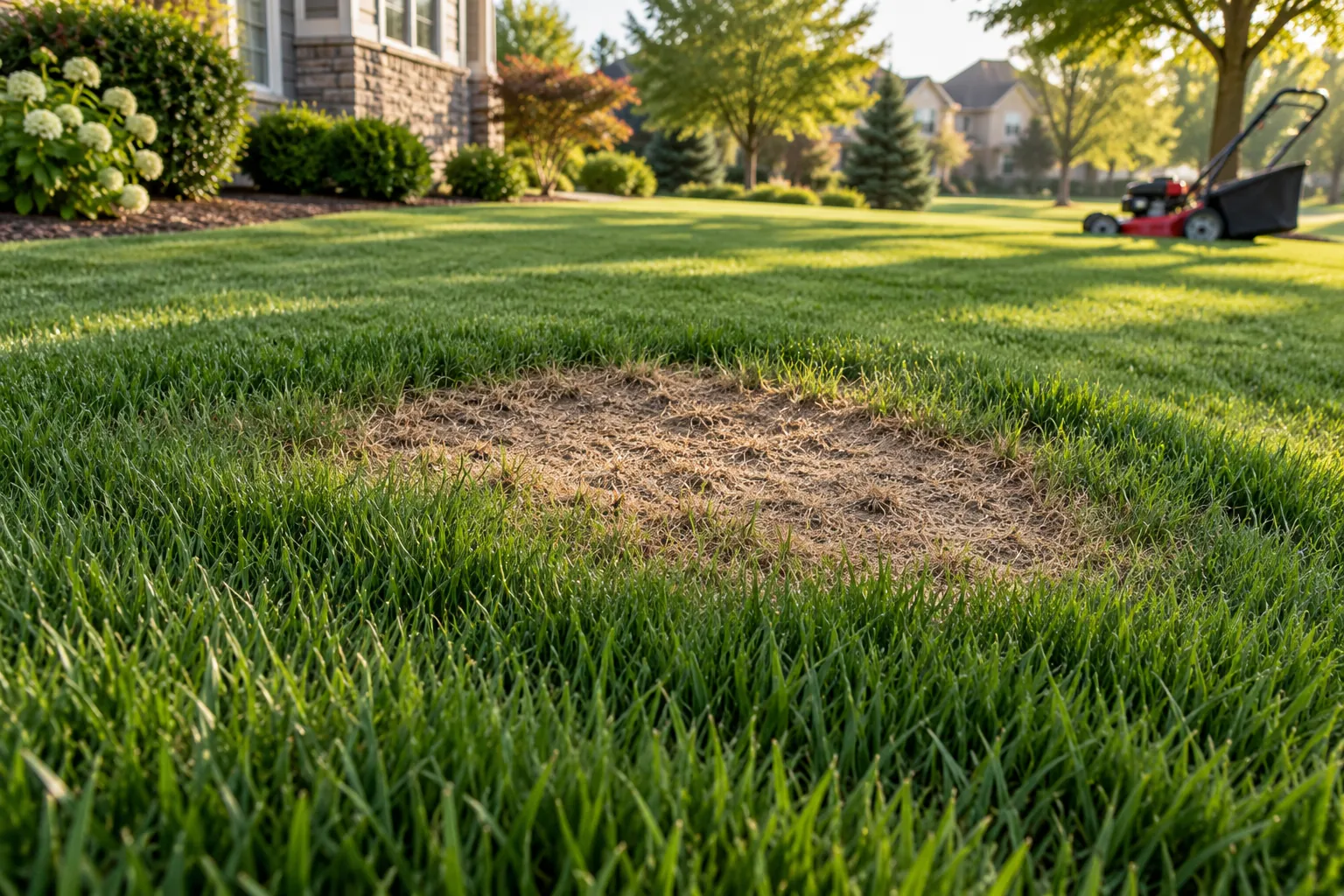
A customer sends a photo of a pale strip after mowing. The crew says the mower was set exactly as it was last week. Both statements can be true. A fixed setting does not account for growth, uneven ground, turns, wheel position, or an equipment problem.
Recurring scalping deserves a diagnostic routine rather than a general reminder to be more careful. The useful questions are where it happens, under what conditions, and whether the pattern follows the property, the machine, or the operator’s route. This guide helps a small lawn-care company collect that evidence and make a proportionate correction.
Confirm what the client is seeing
Start with a site observation when practical. Ask when the area became visible and whether it follows the mower path. Record the location and take contextual photographs. Do not diagnose every brown or pale patch as scalping from a single close-up; other turf problems can resemble a mowing injury.
Distinguish a new cut pattern from a condition that existed before the visit. Check the crew’s arrival notes and previous photographs. If the evidence is uncertain, say so. An early confident explanation can be harder to correct than an honest request for more information.
Use a simple map or annotated site record. “Front lawn near curb, two passes beside the raised utility cover” is actionable. “Grass looks bad” gives the next worker no way to locate, inspect, or avoid the affected area.
Check height against the turf, not habit
Appropriate mowing height depends on grass type and conditions. University of Florida IFAS guidance explains the connection between mowing practices, turf performance, and scalping. It also discusses how mowing direction and terrain influence the result. Use the guidance relevant to the actual species and region.
Do not copy a height from another customer’s lawn simply because both are residential properties. Record the turf identification and the source of the recommendation. If identification is uncertain or the lawn contains different turf types, seek appropriate local advice before standardizing the setting.
Compare the actual cut with the intended cut. A numbered deck position is a machine setting, not proof that every blade of grass is being cut at that height on uneven ground. Inspect equipment according to the manual and use appropriate checks rather than making adjustments while the machine is operating.
Use five questions to find the missing evidence
Five-question review
One or more answers are missing
Resolve the missing information before finalizing the plan. Assign the unanswered check to a named person; do not substitute a guess.
All five checks are complete
Review the evidence and follow the applicable instructions. A completed checklist is not a safety clearance or authorization to operate equipment.
Selections remain on this page only and are not saved or submitted.
The check is a review aid, not a safety certification or a turf diagnosis. Any unanswered question identifies information to obtain. A high completion count does not make a machine safe or prove that the mowing method is appropriate.
Ask the operator to walk through the affected pass. Where were the wheels? Was there a turn, rut, curb transition, or change in slope? Did the cut change with the travel direction? A short reconstruction often reveals information that a photograph of the finished lawn cannot show.
Match the pattern to a useful investigation
| Observed pattern | What to investigate | First operational response |
|---|---|---|
| Same raised spot each visit | Terrain and mower geometry | Mark the zone for a revised method |
| Long uneven strip | Setup, deck condition, wheel position | Inspect the machine using its manual |
| Damage after a long growth interval | Growth removed and scheduling | Review the mowing plan |
| Similar result across properties | Shared machine or operating practice | Check equipment and crew instructions |
| Irregular patches unrelated to passes | A different turf condition | Seek appropriate diagnosis |
These are investigation prompts, not guaranteed causes. More than one factor may be present. For example, an uneven area can become harder to mow cleanly when the turf has grown much taller than usual. Changing only the schedule may not eliminate the terrain issue.
Keep mechanical inspection separate from field improvisation. If equipment appears faulty, remove it from planned service until the appropriate check is complete. Do not ask the crew to compensate for an unresolved fault by driving differently or rushing through the property.
Revisit the interval when growth changes
A fixed weekly or biweekly contract describes a service schedule. It does not guarantee that the same amount of growth will occur between visits. Review whether the agreed frequency remains compatible with the desired result during periods of faster growth.
University of Minnesota Extension’s mowing guidance provides a useful reference for mowing practices and managing the amount removed. Apply current local recommendations to the lawn rather than treating a single height or interval as universal.
If the client’s requested appearance and chosen visit interval conflict, explain the options. A revised interval, a different target within suitable guidance, or another agreed maintenance approach may be needed. Do not silently change the service frequency or promise to recover the appearance in one aggressive cut.
Create a property-specific correction
Replace “watch the uneven area” with a mapped instruction. Name the zone, the approved equipment or method, the relevant restriction, and who can authorize a change. Make sure the instruction is practical for the worker assigned to the next visit.
For a fictional property, the correction might be: “Front curb strip F2 needs supervisor review before mowing because the ground rises around the utility cover. Do not repeat the previous pass. The lead will confirm the appropriate method and record it in the property plan.” The example deliberately avoids prescribing a machine setting without inspecting the site.
If the solution requires specialist repair to the ground, irrigation, or another feature, record it as a separate recommendation. Permission to mow does not authorize changing the property. Our landscaping scope-of-work guide helps keep the correction within an agreed boundary.
Explain the review without blaming the customer
Use a factual response: “We can see the affected strip beside the curb. We are checking the terrain, mower setup, and growth since the last visit before deciding on the correction. We will update the property instructions before the next service.” That is more credible than claiming the grass will recover by a particular date you cannot support.
If your work caused the issue, address it through the company’s service-recovery process. If the cause is uncertain, preserve the evidence and obtain the right assessment. Do not use uncertainty as a reason to ignore the customer’s concern, and do not apply an unapproved treatment to make the area look better temporarily.
Agree on what the next review will examine. The follow-up might check whether the same pass creates a new injury and whether the revised instructions were followed. It should not promise a biological recovery timeline independent of the turf and conditions.
Measure rework in useful units
Suppose a two-person crew makes an illustrative 20-minute return visit to inspect and discuss a recurring issue. That is 40 person-minutes, excluding travel. Three such returns represent two labor-hours. The arithmetic shows the cost of repeated uncertainty; it does not prove a particular cause or establish a customer charge.
Track return visits by reason and property zone. If most incidents come from one machine, investigate that pattern. If they come from one difficult area, improve the site plan. A single overall complaint count can hide the operational change that would actually help.
Review the data with the crew constructively. Ask which information was missing and whether the instruction could be followed. Workers are more likely to report a near miss or uncertainty when the record is used to improve the process rather than assign blame automatically.
Should every pale patch be called scalping?
No. Record the mowing history and visible pattern before naming the cause. If the evidence does not support a mowing-related explanation, arrange an appropriate turf assessment. Changing mower height alone will not answer an unrelated soil, irrigation, pest, or disease question. The field record should preserve uncertainty until the cause is supported.
Carry the correction into the next visit
For a broader customer handoff, our before-and-after visit system explains how to make observations visible. Start with one recurring scalping complaint, verify the pattern, and change one supported cause. A repeatable correction is more valuable than a general promise that the team will be careful next time.
Updated in 2026. Prepared by Clientory Studio with AI-assisted research and editorial review. Numerical scenarios are illustrations unless a source is named. Generated editorial imagery is illustrative, not a photograph of a Clientory customer project.