Business templates made for real service businesses.
Why Moss Keeps Coming Back in Your Lawn—and What Actually Fixes It
Diagnose recurring lawn moss, choose a realistic recovery plan, and quote the work clearly without promising a permanent fix from one treatment.

Short answer: Moss keeps returning when the site still favors moss more than turf. Removing the visible growth does not correct heavy shade, excess moisture, compacted ground, or a grass choice that does not suit the location. For a lawn-care business, the useful service is diagnosis followed by a realistic recovery plan—not a promise to spray the problem away.
In this guide
A client sees a green carpet and asks you to remove it. You can rake it out, leave a cleaner-looking patch, and still receive the same complaint next spring. The missing step is agreeing on what must change before grass can succeed. This guide helps you inspect the site, explain the options, and quote work without turning an uncertain growing problem into an unlimited callback obligation.
Start with the lawn, not the moss
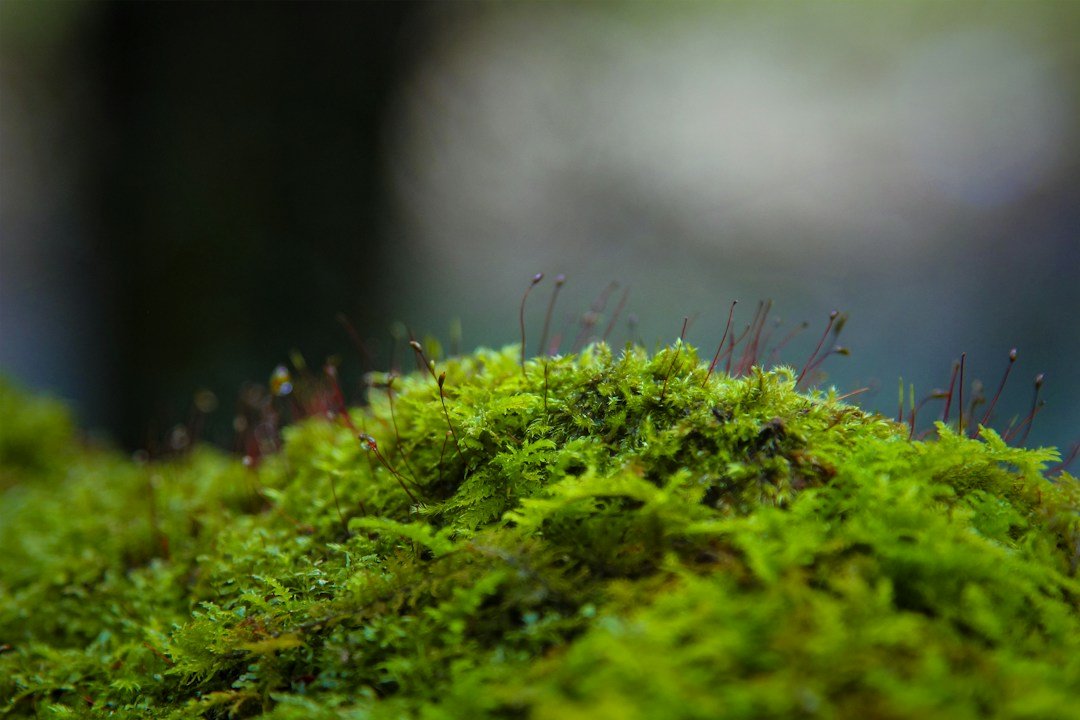
University of Maryland Extension explains that moss generally occupies places where grass has thinned; it is not the cause of the decline. Its lawn-repair guide identifies shade, moisture, compaction, and other unfavorable growing conditions as factors to investigate. That distinction changes your recommendation: the goal is to improve turf conditions or choose a more suitable groundcover.
Walk the entire problem zone before testing a treatment. Compare it with a nearby area where grass is performing better. Photograph both from the same standing position, then photograph the soil surface and surrounding trees, paving, slopes, and downspouts. The comparison often produces better questions than a close-up of the moss alone.
- Light: Does the area receive useful sunlight during the growing season, or does a mature canopy shade it for most of the day? One sunny inspection is not a seasonal light assessment.
- Water: Where does rainfall go? Note low spots, roof drainage, runoff from pavement, and sprinkler overlap. Ask whether the area remains wet after surrounding turf dries.
- Traffic: Look for a shortcut to a gate, a dog route, mower turning areas, or regular vehicle access. A recovery plan must account for continued use.
- Maintenance: Record mowing practices, irrigation settings, recent treatments, and the client’s expectations. Avoid assuming neglect simply because moss is present.
Moss is not a reliable soil-pH test. Maryland’s moss guidance specifically recommends laboratory testing rather than using moss alone to decide whether lime is needed. Do not sell a standard lime application as the automatic first step. If you arrange testing, identify the problem zone separately and follow the laboratory’s sampling instructions.
Five questions that prevent a misleading quote
- When did the grass first thin, and was that before or after the moss appeared?
- Does water collect here after rain, irrigation, or snowmelt?
- Has the area changed—for example, larger trees, a new fence, added paving, or heavier foot traffic?
- What grass or seed mix has already been tried, and what happened afterward?
- Would the client accept a planted bed or retained moss if conventional turf is a poor fit?
Record answers as client-reported history, not confirmed facts. If a homeowner says the neighbor’s drainage caused the damage, do not repeat that statement as your diagnosis without investigation. Keep observations and hypotheses separate. A simple record can use three headings: what we saw, what we need to confirm, and what we recommend next.
Also establish the intended use. A shaded corner that only needs to look tidy is a different project from a children’s play area. A solution that appears attractive in photographs may not tolerate the traffic the client expects. Asking about use before recommending seed avoids optimizing the wrong outcome.
A three-path decision guide
- Path 1 — Conditions can reasonably improve: investigate the limiting factors, agree on corrective work, and plan turf establishment for an appropriate local growing window.
- Path 2 — The site is uncertain: propose a defined trial area and a review milestone rather than renovating the whole yard immediately.
- Path 3 — Conditions will remain unsuitable: discuss a suitable alternative planting or a deliberate moss area instead of repeatedly replacing failed grass.
This is a decision aid, not a treatment prescription. Multiple causes can coexist. A shaded lawn can also be compacted, and solving only one issue may not produce the result the customer expects. If drainage alterations, substantial grading, or tree work are needed, define which specialist will assess them before committing to the lawn portion.
Iowa State Extension notes that moss can be an appropriate low-input groundcover where growing conditions are difficult for other plants. Offer that as a deliberate design option, not as an excuse for poor service. Discuss appearance, access, debris removal, and the client’s intended use before deciding whether it fits.
Put corrective work before the cosmetic finish
Write the work sequence before pricing it. Otherwise, an estimate can accidentally sell reseeding first and leave the prerequisite work as an optional extra. If the prerequisite is declined, revise the expected outcome rather than quietly keeping the original promise.
- 1. Confirm the limiting factors. Gather site history, inspect water movement, identify turf type where possible, and obtain relevant testing.
- 2. Agree on a realistic objective. Define whether the job is temporary appearance improvement, a turf-restoration attempt, a small trial, or conversion to another planting.
- 3. Complete approved corrections. Coordinate irrigation, drainage, compaction, or shade-related work within your competence and authorization.
- 4. Prepare and establish. Remove unwanted moss and prepare the surface using a method suitable for the chosen planting. Follow regional recommendations and product directions.
- 5. Hand over the care plan. Identify watering responsibilities, access restrictions, the next inspection, and circumstances that require a revised plan.
Core aeration is not the same service as dethatching, and neither should be added merely because a lawn looks poor. Use our aeration-versus-dethatching guide to keep those recommendations distinct. Do not operate equipment over unmarked irrigation components or other vulnerable features; resolve access and site information before work begins.
Regional timing matters. A recommendation written for cool-season turf in the Upper Midwest cannot automatically be applied to a warm-season lawn in the Southeast. Confirm the local species, growing window, and establishment guidance through your state extension service. Do not promise a fixed number of days to full coverage: weather, seed choice, site preparation, and aftercare all affect the result.
If a moss-control product is considered, first confirm that it is labeled for the intended use, that you may legally apply it commercially, and that its directions fit the site. Protect adjacent surfaces and follow all label precautions. A product is not a substitute for a site plan. Wisconsin Extension’s moss-control guidance emphasizes changing growing conditions for durable improvement.
Quote the diagnosis and the work separately
Give the customer a readable scope rather than one line saying ‘fix moss.’ Break the proposal into assessment, approved corrections, surface preparation, establishment materials, and follow-up. State which items are included now and which require another decision. This makes a change in scope visible before the crew absorbs it.
Illustrative labor calculation—not a market price: Suppose inspection and documentation take 0.75 labor-hour, preparation takes 2.5 labor-hours, establishment takes 1.25 labor-hours, and the planned review takes 0.5 labor-hour. The total is 5 labor-hours. At an internal loaded labor cost of $35 per hour, labor cost is $175 before materials, equipment, travel, overhead, and profit. Two people working one hour count as two labor-hours.
This example is intentionally not a customer price recommendation. Substitute measured quantities, your actual costs, and the approved tasks. If the correction requires an outside specialist, do not hide that uncertainty inside a fixed reseeding allowance. Obtain their scope or list the dependency explicitly.
Include the treatment area, preparation method, exclusions, disposal arrangements, client watering duties, and review criteria. Avoid an unconditional promise that moss will never return. A better written outcome is a documented attempt to improve the identified growing conditions, with a specific establishment and follow-up plan.
Measure progress without creating an endless callback
Set the review point around the establishment method and local conditions, not a universal calendar promise. On the first review, compare the same photo locations and note coverage, bare areas, surface wetness, traffic, and whether the agreed care plan was followed. Record conditions neutrally. The purpose is to make the next decision, not to assign blame.
A simple site sketch can divide the area into named zones such as gate strip, tree corner, and downspout edge. That makes a report actionable: ‘persistent wetness at the downspout edge’ is more useful than ‘the yard still looks bad.’ If one zone fails while another improves, reassess the local cause before repeating the entire treatment.
Use seasonal property notes to preserve these observations between crews and visits. Close the original job with the agreed evidence, then issue a new recommendation if conditions or objectives have changed.
Use the same observations at each review
Divide the problem area into named zones and repeat the same check in each one. This makes the review reproducible and helps distinguish a localized problem from failure across the whole site.
| Observation | Record consistently |
|---|---|
| Photo and zone | Name the zone and repeat the same photo position and framing. |
| Coverage | Approximate turf coverage, visible moss, and bare soil. Label visual estimates as estimates. |
| Water conditions | Surface wetness and recent rainfall or irrigation reported or observed. |
| Use and next action | Recent traffic, agreed care completed, remaining questions, and the next responsible person. |
Compare zones before ordering more treatment. Improvement in a trial area with continued failure near a downspout calls for a different investigation from uniform failure across the lawn. Agree in advance what would justify continuing establishment, investigating drainage, or changing the planting objective. Base those decisions on the site and local growing conditions rather than a universal success percentage.
Questions clients ask
Will raking remove moss permanently? It can remove visible moss, but it does not establish that the conditions causing weak turf have changed. Explain removal and recovery as separate parts of the service.
Should every mossy lawn receive lime? No. Use a soil test and an appropriate recommendation. Moss alone does not tell you the soil’s pH or the amount of amendment needed.
Can more fertilizer solve the problem? Not automatically. Fertility is only one possible factor. A heavily shaded or poorly drained site may still perform badly after fertilizer is added.
What is the next practical step? Before quoting treatment, photograph the problem area, record its water and light conditions, and ask the five intake questions above. Then choose correction, a limited trial, or an alternative planting. That decision is the foundation of a useful estimate.
Updated in 2026. This guide combines university extension guidance with practical service-planning recommendations. Follow local turf recommendations and applicable product labels.